This post may contain references to products from one or more of our advertisers. Oh Sweet Basil may receive compensation when you click on links to such products.
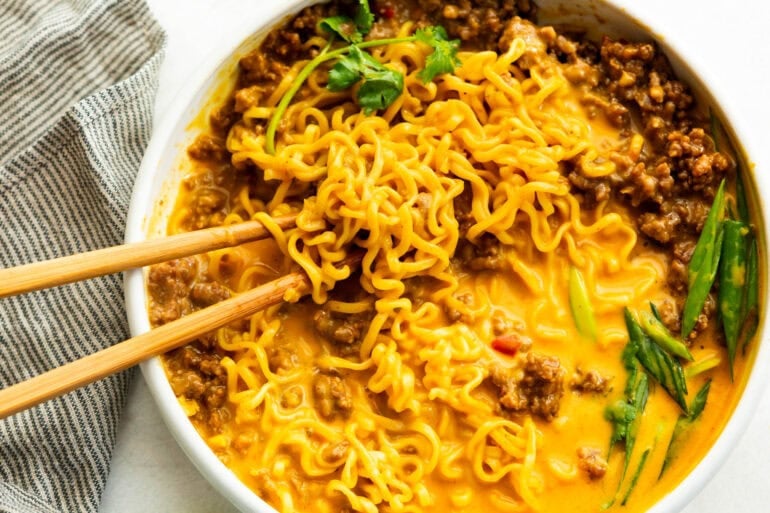
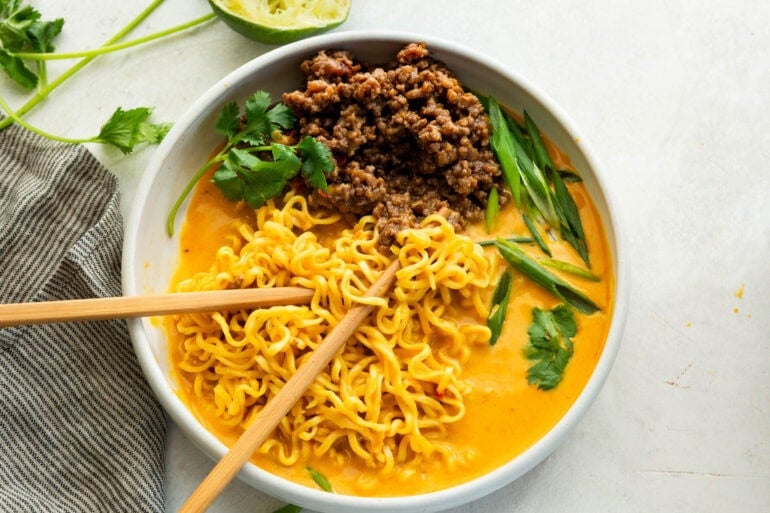
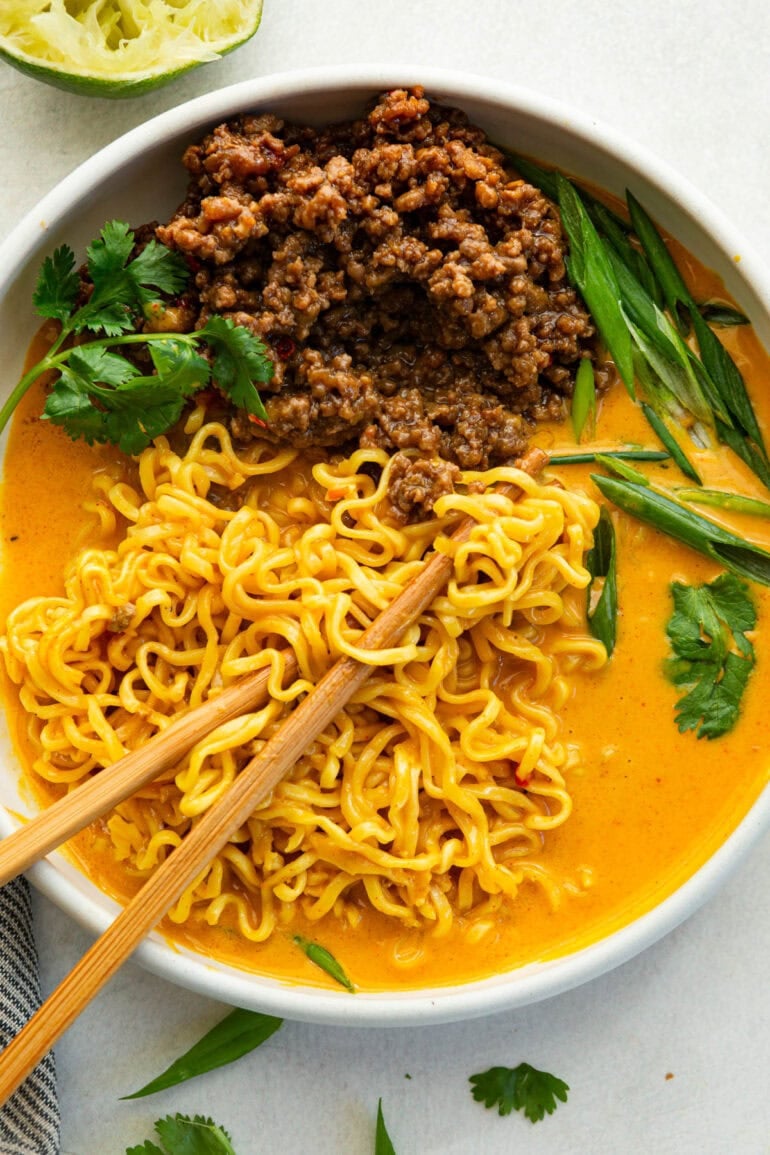
These Korean ground beef broth ramen bowls are loaded with crispy, caramelized beef, tender ramen noodles and a rich, creamy coconut gochujang broth! The noodles cook right in the broth, soaking up all that sweet, savory and spicy flavor without needing another pot.
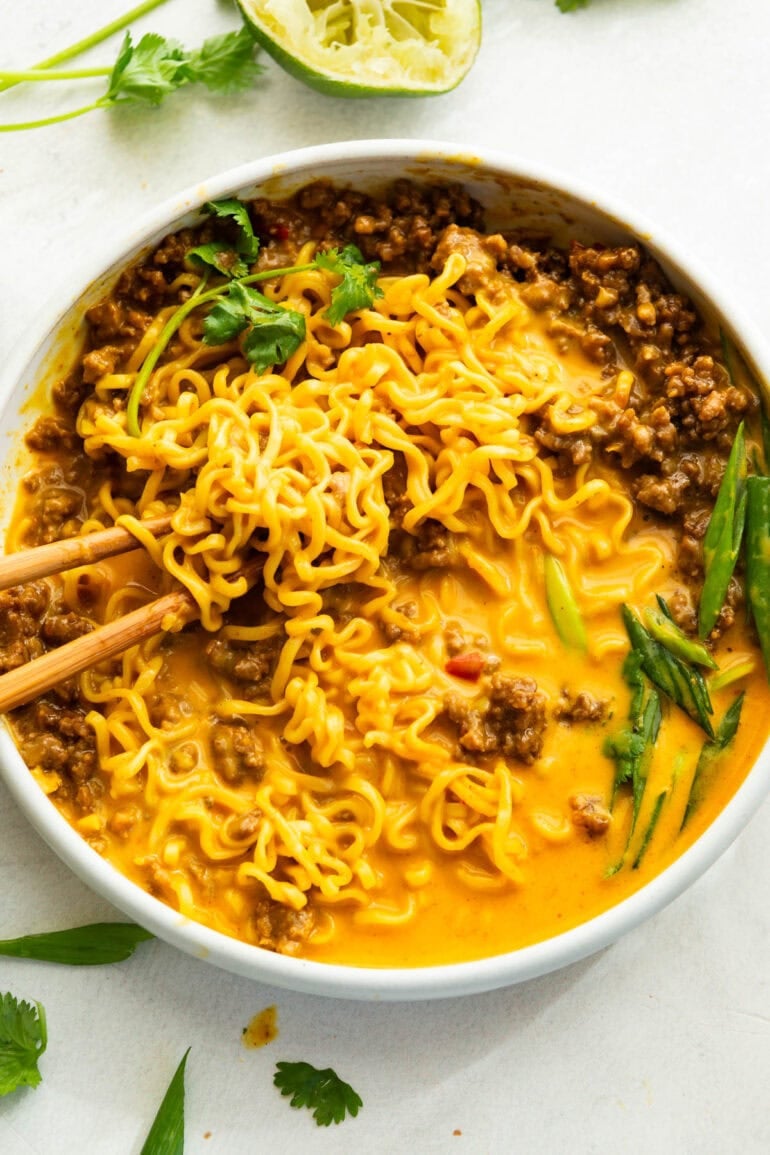
Table of Contents
- Ingredients You’ll Need
- How to Make Korean Ground Beef Ramen Bowls
- Why You Should Cook Ramen Noodles in the Broth
- Tips for the Best Korean Beef Ramen
- Is Korean Ground Beef Ramen Spicy?
- Troubleshooting Korean Ground Beef Ramen
- What to Serve with Korean Ground Beef Ramen
- How to Store and Reheat Korean Ground Beef Ramen
- More Ground Beef Recipes
- Watch This Video Tutorial
- Korean Ground Beef Broth Ramen Bowl Recipe
You guys, you know how much we LOVE our Korean Ground Beef Recipe! Well, we’ve taken those same sweet and savory flavors and turned them into the most incredible ramen bowls based off our VIRAL Beef Broth Bowls!
And here’s the game changer: cooking the ramen noodles directly in the broth! Every bite soaks up all that creamy, spicy flavor, and when you add the crispy beef and a squeeze of fresh lime?! HEAVEN!!
Plus, everything cooks in the same skillet, so there’s hardly any cleanup!
Why You’ll Love These Korean Ground Beef Ramen Bowls

- The crispy beef is irresistible! Browning the beef before breaking it apart creates those delicious caramelized edges that make every bite even better.
- The broth is something special! Creamy coconut milk balances the heat from the gochujang while lime adds just the right amount of brightness.
- The textures are incredible! Tender noodles, crispy beef and crunchy scallions make every bite a little different.
- Make it your own! Add more heat, pile on your favorite vegetables or customize the toppings for everyone at the table.
- Better than basic instant ramen! A few simple ingredients turn inexpensive ramen noodles into a seriously delicious dinner.
Ingredients You’ll Need
For the Crispy Korean Ground Beef
- Canola Oil: Helps the ground beef develop those crispy, browned edges.
- Ground Beef: Ground chuck is a great choice for rich flavor and delicious caramelization.
- Garlic: Adds savory depth to the beef.
- Soy Sauce: Brings that salty, umami flavor that makes Korean-inspired beef so delicious.
- Orange Juice: Adds a little sweetness and bright citrus flavor.
- Brown Sugar: Helps create the sticky, caramelized coating on the beef.
- Sweet Chili Sauce: Adds sweetness with a little gentle heat.
- Toasted Sesame Oil: Gives the beef a rich, nutty finish.
- Cornstarch: Helps thicken the sauce so it clings to the beef.
For the Coconut Gochujang Broth
- Garlic and Fresh Ginger: Build a fragrant, flavorful base for the broth.
- Gochujang: A Korean fermented chili paste that adds spicy, savory and slightly sweet flavor.
- Yellow Curry Powder: Adds warm spices and extra depth.
- Coconut Milk: Makes the broth creamy and balances the spicy gochujang.
- Chicken Broth: Creates the savory base for cooking the ramen noodles.
- Soy Sauce: Adds another layer of umami flavor.
- Fresh Lime: Brightens the creamy broth and balances the richness.
- Fresh Cilantro: Adds a fresh, herby finish.
For the Ramen Bowls
- Lime Wedges: Serve alongside the ramen so everyone can add a fresh squeeze of lime.
- Ramen Noodles: Use the noodles from instant ramen packages and skip the seasoning packets.
- Scallions: Add a fresh, mild onion flavor and a little crunch that balances the rich, creamy broth.
- Fresh Cilantro: Sprinkle over the finished bowls.
- Sweet Chili Sauce: Drizzle over the top for a little extra sweetness and heat.
How to Make Korean Ground Beef Ramen Bowls
- Brown the Beef: Heat the oil in a large skillet over medium-high heat. Add the ground beef in one piece and let it brown for 2–3 minutes per side before breaking it apart. This is the secret to those delicious crispy edges! Cook until no pink remains.
- Caramelize the Beef: Break the beef into pieces and stir in the garlic, soy sauce, orange juice, brown sugar, sweet chili sauce, sesame oil and cornstarch. Cook for another 2–3 minutes until the sauce reduces and coats the beef in a sticky glaze. Transfer to a plate and keep warm.
- Build the Gochujang Broth: Don’t wash the skillet! Reduce the heat to low and add the garlic and ginger, along with a little oil if needed. Cook briefly, then stir in the gochujang and curry powder until fragrant.
- Make It Creamy: Pour in the coconut milk and chicken broth, scraping up all those flavorful browned bits from the bottom of the skillet. Whisk until smooth and bring to a boil for about 1 minute.
- Cook the Ramen in the Broth: Stir in the soy sauce, juice from half the lime and cilantro. Add the ramen noodles directly to the broth and reduce to a steady simmer. Cook for approximately 3 minutes, or until the noodles are tender, adding a splash of broth or water if needed.
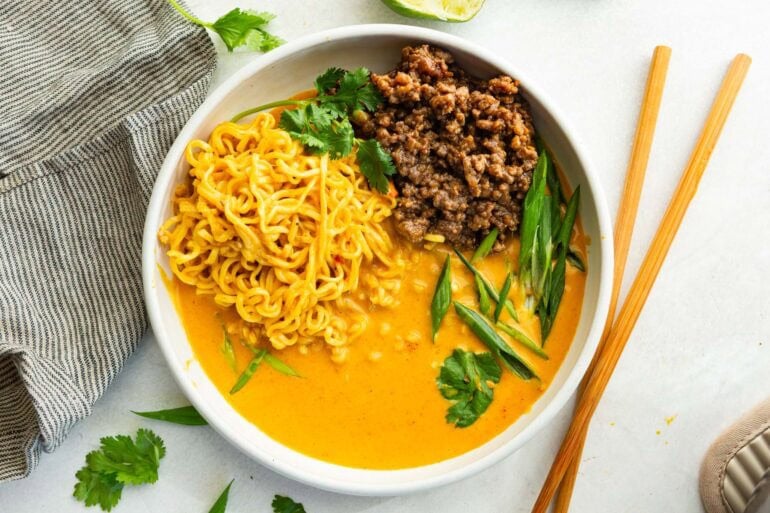
- Assemble the Bowls: Use tongs to lift the noodles into serving bowls. Add the crispy Korean beef, then ladle the hot coconut gochujang broth around everything.
- Add the Toppings: Finish with scallions, fresh cilantro, a drizzle of sweet chili sauce and lime wedges. Serve immediately!
- Other toppings: cucumbers, edamame, snap peas, shredded carrots, bean sprouts or sesame seeds.
Why You Should Cook Ramen Noodles in the Broth
If you’ve tried our Viral Beef Broth Bowls, you already know how incredible that crispy ground beef and creamy coconut broth combination is! But swapping the rice for ramen noodles? GAME CHANGER!
The secret is cooking the ramen directly in the coconut gochujang broth instead of plain water. Here’s why:
- More flavor: The noodles soak up the creamy, spicy broth as they cook.
- Fewer dishes: No separate pot for boiling and draining noodles!
- Better texture: The starch from the noodles helps give the broth a little extra body.
Just watch the noodles closely and serve immediately so they don’t get too soft.
Tips for the Best Korean Beef Ramen
- Don’t break up the beef too soon. Letting it brown in one piece first creates a flavorful crust instead of simply steaming the meat.
- Keep those browned bits! The caramelized bits left in the skillet add incredible flavor to the coconut broth.
- Use full-fat coconut milk. It gives the broth the richest, creamiest texture.
- Don’t use the ramen seasoning packets. The homemade broth already has plenty of flavor and seasoning.
- Watch the noodles closely. Ramen cooks quickly, especially in a hot, creamy broth. Remove it from the heat as soon as it’s tender.
- Adjust the heat to your taste. Start with less gochujang if you’re sensitive to spice, then add more as needed.
- Serve immediately. Ramen noodles continue absorbing liquid as they sit, so these bowls are best enjoyed fresh.
Is Korean Ground Beef Ramen Spicy?
This ramen has a little kick from the gochujang, but the creamy coconut milk helps balance the heat!
If you prefer mild ramen, start with just 1 tablespoon of gochujang instead of 2. You can always stir in more after tasting the broth.
Want it spicier? Add extra gochujang or a drizzle of chili oil or sriracha!
Troubleshooting Korean Ground Beef Ramen
The ramen noodles absorb liquid and release starch as they cook. Stir in a splash of chicken broth or water until the broth reaches your preferred consistency.
They probably cooked too long or sat in the hot broth after cooking. Ramen only needs a few minutes, so serve the bowls immediately.
The beef may have been broken apart too soon or the skillet wasn’t hot enough. Let the beef develop a golden-brown crust before breaking it into pieces, and avoid overcrowding the pan.
Gochujang varies in heat depending on the brand. Add a little more coconut milk or broth to mellow the spice, and start with less gochujang next time.
Between the soy sauce, gochujang and chicken broth, the saltiness can add up. Use low-sodium chicken broth and add the final tablespoon of soy sauce gradually, tasting as you go.
Boiling coconut milk too aggressively can cause some separation. Keep the broth at a gentle simmer after combining the ingredients and whisk until smooth.
What to Serve with Korean Ground Beef Ramen
These Korean ground beef ramen bowls are pretty much a complete meal on their own, but if you want something fresh and crunchy on the side, our Asian Cucumber Salad is the perfect match!
The cool, crisp cucumbers and tangy dressing are SO GOOD with the rich, creamy coconut gochujang broth. Plus, it’s an easy side dish you can throw together while the ramen cooks!
How to Store and Reheat Korean Ground Beef Ramen
Storing: For the best texture, store the beef, broth and noodles separately in airtight containers in the refrigerator for up to 3–4 days. The noodles will continue absorbing liquid if left in the broth.
Reheating: Warm the beef and broth in a skillet or saucepan over medium-low heat until heated through. Add a splash of chicken broth if needed to loosen the sauce. Stir in the cooked noodles just long enough to warm them.
Making Ahead: Prepare the crispy Korean beef and coconut gochujang broth up to 2 days ahead and refrigerate separately. When you’re ready to eat, bring the broth to a simmer and cook the dry ramen noodles directly in it. Then assemble the bowls with the reheated beef and fresh toppings!
Freezing: The cooked beef freezes well for up to 3 months. I don’t recommend freezing the assembled ramen bowls because the noodles can become mushy and the coconut broth may separate when thawed.
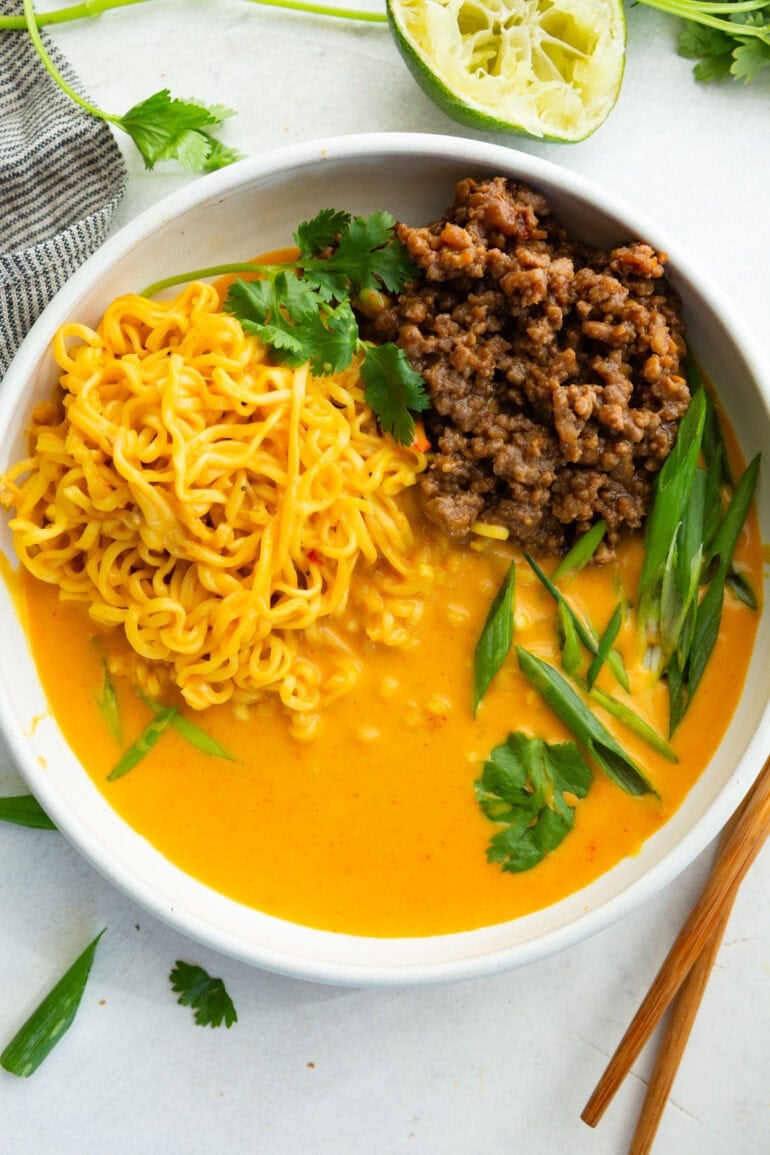
If you’ve been looking for a new way to use ground beef, these Korean ground beef ramen bowls are going to become a favorite! That crispy, sweet and savory beef with the creamy coconut gochujang broth is just SO GOOD. And once you try cooking ramen noodles directly in the broth, you’ll never want to go back to plain water!
Grab a big bowl, pile on the fresh toppings and don’t forget that squeeze of lime!
More Ground Beef Recipes
- Easy Ground Beef Vegetable Soup
- Ground Beef Tacos
- Cheesy Ground Beef and Rice Casserole
- Ground Beef Burrito Bowls
Watch This Video Tutorial
Korean Ground Beef Broth Ramen Bowl

Ingredients
Ground Beef
- 1 Tablespoon Canola Oil
- 1 Pound Ground Beef, or ground chuck
- 2 Cloves Garlic, minced
- ¼ Cup Soy Sauce
- ¼ Cup Orange Juice
- 2 Tablespoons Brown Sugar
- 2 Tablespoons Sweet Chili Sauce
- 1 teaspoon Toasted Sesame Oil
- 1 ½ teaspoons Cornstarch
Coconut Gochujang Broth
- 1 ½ Cloves Garlic, minced
- 2 teaspoons Fresh Ginger, grated
- 3 Tablespoons Gochujang
- 1 ½ teaspoons Yellow Curry Powder
- 1 ½ Cans Coconut Milk, 20 oz total
- 1 ½ Cups Chicken Broth
- 1 ½ Tablespoons Soy Sauce
- 1 Lime, large, divided
- ¼ Cup Fresh Cilantro, finely chopped
- 1 Package Ramen, 3 oz, discard the seasoning packet
For Serving
- Scallions
- Fresh Cilantro
- Sweet Chili Sauce
- Lime Wedges
Instructions
Make the Crispy Beef
- In a skillet over medium high heat, add the canola oil and then the entire piece of ground beef.1 Tablespoon Canola Oil, 1 Pound Ground Beef
- Turn the heat to medium, and brown the ground beef for 2-3 minutes per side before breaking it up. We want crispy bits on both sides, so once it is browning, you can begin breaking it up. Cook until no pink remains.
- Add the remaining beef ingredients and stir everything together. Cook for another 2-3 minutes until the liquid fully reduces and begins to thicken and caramelize on the bottom. Remove to a plate or dish tented with foil.2 Cloves Garlic, ¼ Cup Soy Sauce, ¼ Cup Orange Juice, 2 Tablespoons Brown Sugar, 2 Tablespoons Sweet Chili Sauce, 1 teaspoon Toasted Sesame Oil, 1 ½ teaspoons Cornstarch
Coconut Gochujang Broth
- Do not wash the pan, we want to keep the browned bits in the skillet. If the pan is dry, add a little coconut oil or vegetable oil.
- Reduce the heat to low and add the garlic and ginger. Cook for about 20 seconds, then stir in the Gochujang and curry powder. Cook for about 1 minute, until fragrant.1 ½ Cloves Garlic, 2 teaspoons Fresh Ginger, 3 Tablespoons Gochujang, 1 ½ teaspoons Yellow Curry Powder
- Pour in the broth and coconut milk and scrape up the browned bits from the bottom of the skillet with a whisk. Whisk until smooth.1 ½ Cans Coconut Milk, 1 ½ Cups Chicken Broth
- Bring the broth to a boil and cook for 1 minute.
- Stir in the soy sauce, juice of half a lime, and chopped cilantro. Add more lime juice or soy sauce to your preference.1 ½ Tablespoons Soy Sauce, 1 Lime, ¼ Cup Fresh Cilantro
- Add the ramen to the broth and reduce the heat to medium-high. Let the ramen and broth simmer until the ramen is cooked (about 3 minutes).1 Package Ramen
Serving
- Use tongs to lift a serving of ramen from the pan and place into each bowl with a serving of the beef.
- Then ladle the hot coconut Gochujang broth around the ramen and beef.
- Place scallions on the side, fresh cilantro, and a light drizzle of sweet chili sauce. Serve with lime wedges to squeeze on top!Fresh Cilantro, Lime Wedges, Sweet Chili Sauce
Nutrition
Nutrition information is automatically calculated, so should only be used as an approximation.