This post may contain references to products from one or more of our advertisers. Oh Sweet Basil may receive compensation when you click on links to such products.
This easy pie crust recipe is flaky, tender and made from scratch with simple ingredients, including shortening, egg and vinegar. There’s no chilling required, so you can roll it out right away and no pie weights required for blind baking!!
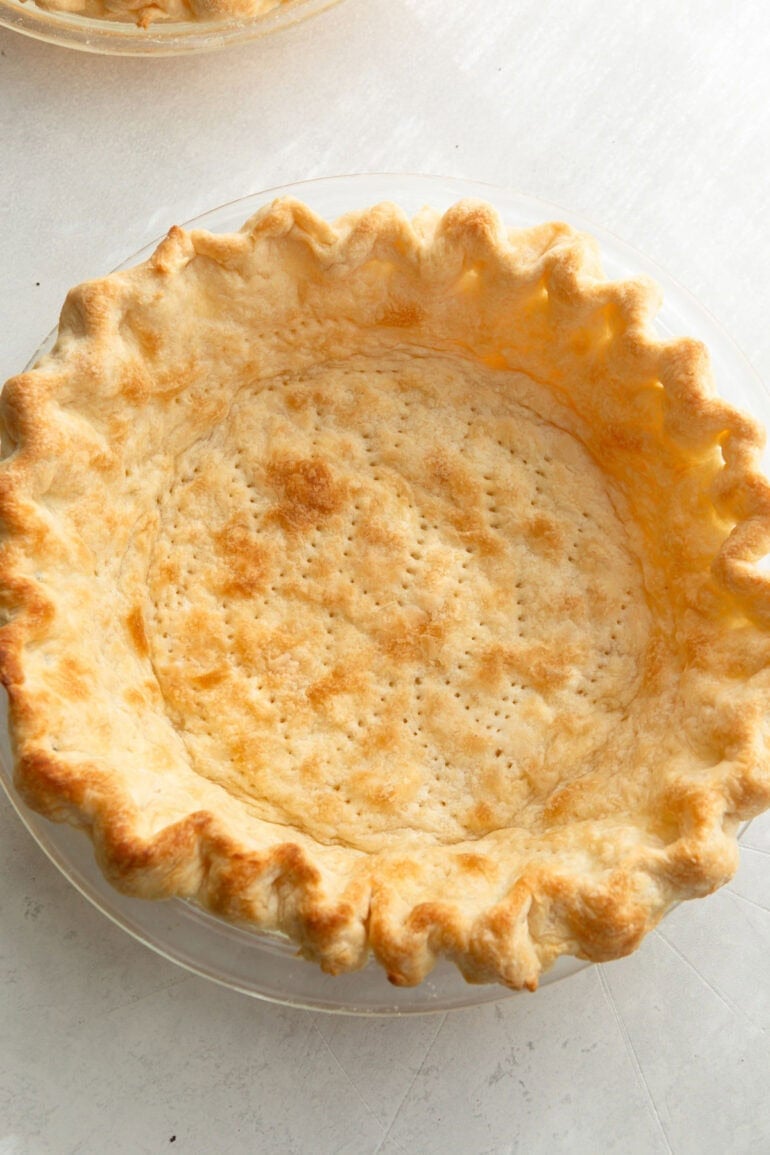
Table of Contents
- QUICK LOOK
- Ingredients You’ll Need
- How to Make Homemade Pie Crust
- Tips for the Best Flaky Pie Crust
- Why Does This Pie Crust Recipe Have Egg and Vinegar?
- Is Pie Crust Better with Butter or Shortening?
- How to Blind Bake Pie Crust (No Pie Weights Needed!)
- Pie Crust Troubleshooting
- How to Store and Freeze Homemade Pie Crust
- Pie Recipes to Try:
- Watch This Video Tutorial
- Easy Pie Crust Recipe
This recipe has been passed down from my grandma to my mom and now to me, and it’s one of those family recipes I hope my girls will pass down someday, too! We call it Mom’s Fail-Proof Magic Pie Crust, and once you learn a few simple tricks, you’ll see that making homemade pie crust really isn’t as intimidating as it seems!
QUICK LOOK
- Prep Time: Approximately 15 minutes
- Chill Time: None required!
- Yield: 2 single pie crusts or 1 double-crust pie
- Skill Level: Beginner-friendly
- Make Ahead: Freeze the extra dough for up to 3 months
Why You’ll Love This Easy Pie Crust Recipe

- Flaky and tender: Shortening creates a deliciously tender crust that’s perfect for all your favorite pies.
- No chilling required: Mix, roll and shape your dough without waiting for it to rest!
- Simple ingredients: Grandma’s secret additions of egg and vinegar make this old-fashioned recipe extra special.
- Makes two crusts: Use both for a double-crust pie or freeze one for later!
Ingredients You’ll Need
You only need a few simple ingredients to make Grandma’s homemade pie crust!
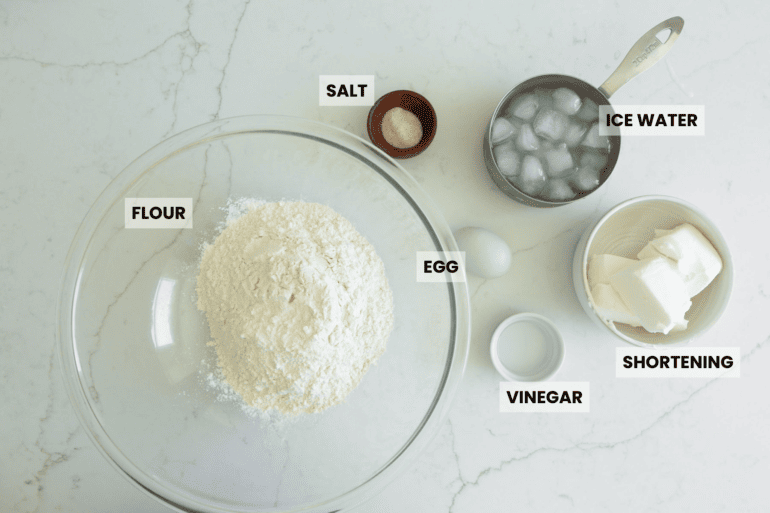
- All-Purpose Flour: Gives the crust structure while keeping it tender.
- Salt: Enhances the flavor of the crust.
- Shortening: The secret to a tender, flaky pie crust! Make sure it’s chilled before using. I highly recommend using butter flavored if you have it for even more flavor!
- Egg: Helps bind the dough together and contributes to its texture.
- Vinegar: Grandma’s special addition! Adds acidity to the dough without making the crust taste like vinegar.
- Ice Water: Keeps the shortening cold while bringing the dough together.
PRO TIP: Use cold shortening and ice water! Keeping the fat cold helps create a flaky crust instead of a dense, tough one.
How to Make Homemade Pie Crust
You don’t need any fancy equipment to make this homemade pie crust! Just a mixing bowl, fork and rolling pin.
- Mix the dry ingredients. Combine the flour and salt, then cut in the chilled shortening until the mixture resembles coarse cornmeal.
- Prepare the wet ingredients. Whisk together the egg and vinegar. Chill ½ cup water with 3–4 ice cubes, remove the ice, then add the cold water to the egg mixture.
- Combine. Pour the wet ingredients into the flour mixture and stir gently with a fork until the dough comes together. Don’t overmix!
- Divide the dough. Gently shape into two equal discs. Wrap one tightly and freeze for later, or use both for a double-crust pie.
- Roll and transfer. Roll the dough on a lightly floured surface, fold it into quarters, then transfer it to your pie plate and unfold.
- Shape the edges. Trim the excess dough, leaving a slight overhang, then pinch the edges to create a fluted border.
- Bake or fill. If blind baking, prick the bottom and sides with a fork. Otherwise, add your filling and bake according to your pie recipe.
PRO TIP: Don’t overmix or knead the dough! Handle it as little as possible to keep your pie crust tender and flaky.
Tips for the Best Flaky Pie Crust
- Keep everything cold. Chilled shortening and ice water help create a tender, flaky crust.
- Don’t overmix. Stir just until the dough comes together. Overworking it can make the crust tough.
- Roll from the center outward. Rotate the dough as you roll to prevent sticking and keep the thickness even.
- Don’t stretch the dough. Gently unfold it into the pie plate without pulling or stretching to prevent shrinking.
- Use the folding trick! Fold the rolled dough into quarters to transfer it easily to your pie plate without tearing.
Why Does This Pie Crust Recipe Have Egg and Vinegar?
Grandma’s pie crust has two ingredients you don’t always see in homemade pie dough: egg and vinegar!
The egg helps bind the dough together, while the vinegar adds a little acidity. They’re part of what makes this old-fashioned family recipe different from a traditional pie crust.
And don’t worry, you won’t taste the vinegar!
Is Pie Crust Better with Butter or Shortening?
Both make delicious pie crust, but they create slightly different results!
Butter gives pie crust a rich, buttery flavor, while shortening creates a tender crust that’s often easier to work with because it has a higher melting point.
Grandma always used shortening in this recipe, and I love how tender and flaky the crust turns out! If you want to use butter instead, I recommend following a recipe specifically developed for butter rather than swapping it into this one without adjusting the measurements.
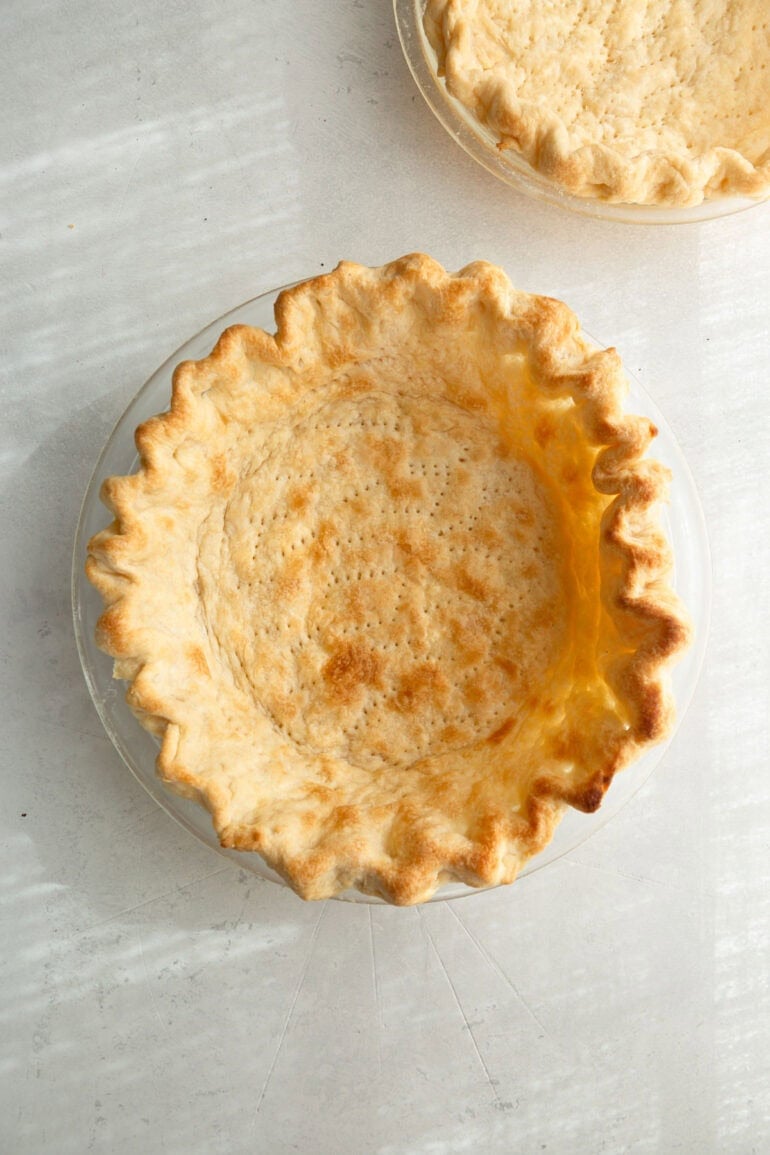
How to Blind Bake Pie Crust (No Pie Weights Needed!)
Blind baking simply means baking your pie crust before adding the filling. It’s especially important for cream pies and other desserts that don’t need to be baked after filling.
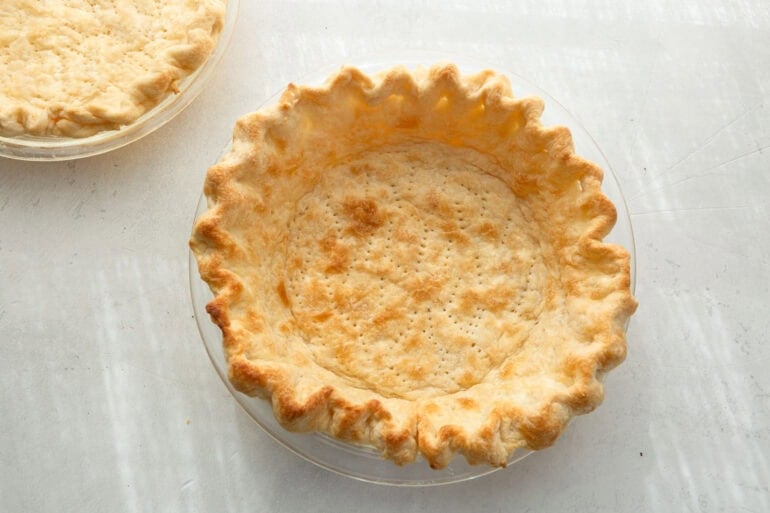
The best part? You don’t need pie weights for this recipe! Just prick the bottom and sides of the crust with a fork to help prevent puffing.
- Prepare the crust. Roll out the dough, transfer it to your pie plate and flute the edges.
- Dock the dough. Prick the bottom and sides all over with a fork to allow steam to escape.
- Bake. Bake at 425°F for approximately 15–20 minutes, or until the crust is golden brown. If the edges brown too quickly, reduce the temperature to 375°F.
- Cool. Let the crust cool completely before adding a no-bake filling.
PRO TIP: If your crust tends to shrink, refrigerate it for 20–30 minutes before baking. It’s optional, but it can help the dough hold its shape.
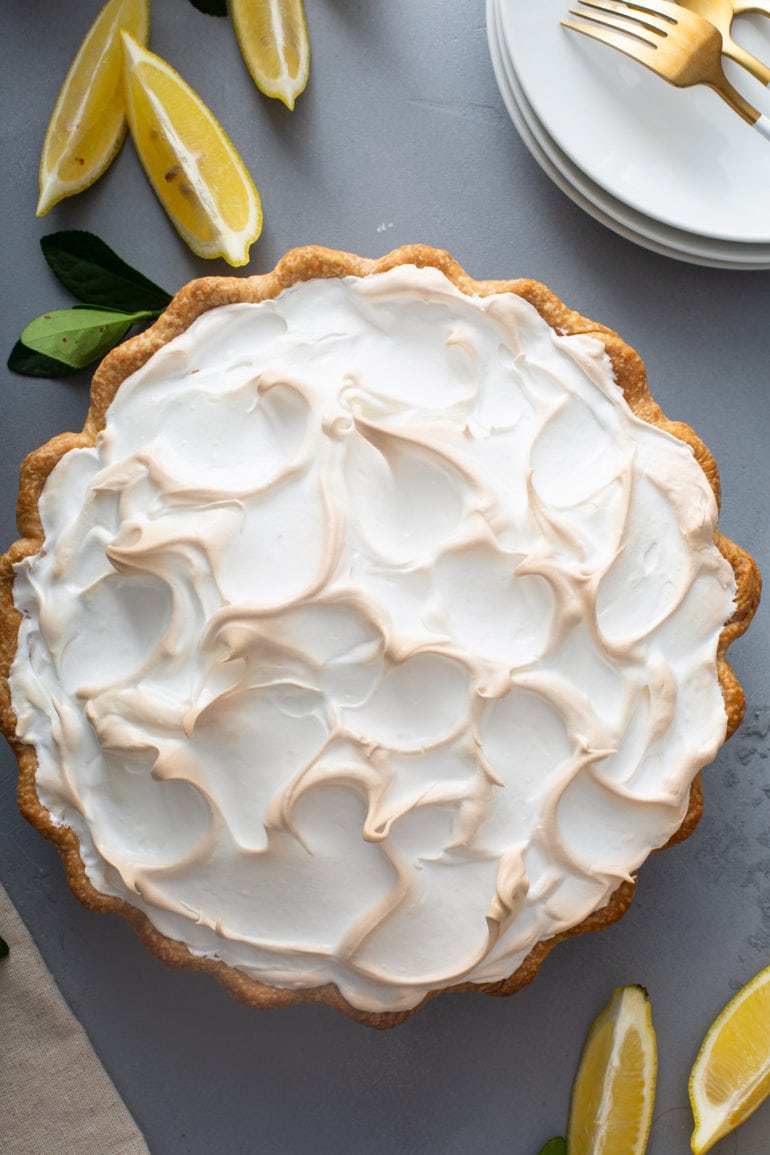
Check out our lemon meringue pie recipe for a delicious way to use a blind-baked pie crust!
Pie Crust Troubleshooting
Even an easy pie crust recipe can have a few hiccups! Here’s how to fix the most common problems.
Overmixing the dough, adding too much water or using too much flour while rolling can make pie crust tough.
The secret is to handle the dough as little as possible! Mix just until the ingredients hold together, and don’t knead the dough.
If your dough is cracking and falling apart when you try to roll it out, it may be too dry.
Sprinkle a little ice-cold water over the dough and gently work it in just until the dough holds together. Add more only if needed.
Sticky dough can happen when there’s too much liquid or the shortening gets too warm.
Try refrigerating the dough for 10–15 minutes to firm it up. If it’s still sticky, lightly flour your work surface and rolling pin.
Pie crust can shrink if the dough is stretched to fit the pie plate or doesn’t have enough time to relax.
Gently lower the dough into the pie plate without pulling or stretching it. If it feels elastic or keeps pulling back, refrigerate it briefly before baking.
How to Store and Freeze Homemade Pie Crust
This recipe makes enough dough for two pie crusts, so it’s perfect for making ahead!
- Refrigerator: Wrap the dough tightly in plastic wrap and refrigerate for up to 2–3 days.
- Freezer: Wrap each dough disc tightly in plastic wrap, then place it in a freezer-safe bag. Freeze for up to 3 months.
- Thawing: Transfer frozen dough to the refrigerator overnight. Roll it out while it’s still cold but pliable.
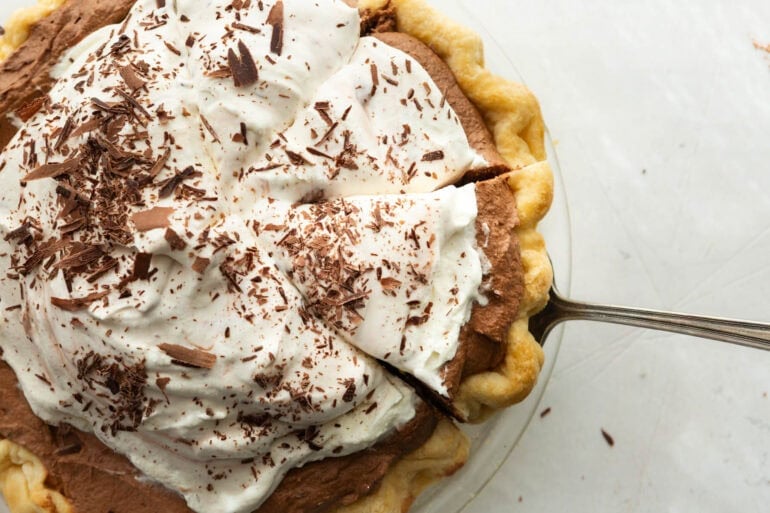
Once you try this easy pie crust recipe, you’ll see that homemade pie crust doesn’t have to be complicated! With a few simple ingredients and Grandma’s tried-and-true method, you’ll have a tender, flaky crust ready for all your favorite pies. And with enough dough for two crusts, you can even save one for next time!
Pie Recipes to Try:
Watch This Video Tutorial
Easy Pie Crust Recipe
Ingredients
- 3 Cup Flour
- 1 teaspoon Salt
- 1 ¼ Cup Shortening, chilled, I prefer butter flavored if you have it!
- 1 Egg
- 1 Tablespoon Vinegar
- Ice Cubes
- ½ Cup Cold Water
Instructions
- Cut together the flour, salt and crisco until it looks like corn meal.3 Cup Flour, 1 teaspoon Salt, 1 ¼ Cup Shortening
- Then, in a 1 cup measuring cup, combine 1 egg (slightly beaten), and vinegar.1 Egg, 1 Tablespoon Vinegar
- Add a couple of ice cubes up to 3 or 4 to another cup, add 1/2 cup full of water, and let the water get really cold, remove the ice cubes and add 1/2 cup water to the egg and vinegar.Ice Cubes, ½ Cup Cold Water
- Combine the wet and dry ingredients & stir with a fork until combined.
- Then use your hands to divide into two dough discs and wrap one in saran wrap and a plastic freezer bag to freeze for future use.
- Roll the other disc out. Once it is rolled out to the right size, I like to fold it in half and then in half the other way. Then you can pick it up & put it in the pie dish, and unfold it.
- Trim the edges to a uniform length, slightly larger than the pie dish.
- Pinch the dough between your fingers to form a zig-zag.
- Use a fork to poke holes throughout the bottom and sides of the crust if you're blind baking the crust.
- Bake according the directions for your particular pie. *See notes below for instructions on blind baking a pie crust.
Recipe Notes
Nutrition
Nutrition information is automatically calculated, so should only be used as an approximation.